Pub History · 29 October 2026
If You Hadn’t Noticed You Will Now
The Story Behind the Off-Centre Hook on Our Grand Stone Fireplace If you’ve ever pulled up a chair by our fire on a cold morning, wrapped your hands around a warm mug or a pint, you’ve probably caught yourself studying the stone around the hearth.
The Story Behind the Off-Centre Hook on Our Grand Stone Fireplace
If you’ve ever pulled up a chair by our fire on a cold morning, wrapped your hands around a warm mug or a pint, you’ve probably caught yourself studying the stone around the hearth.
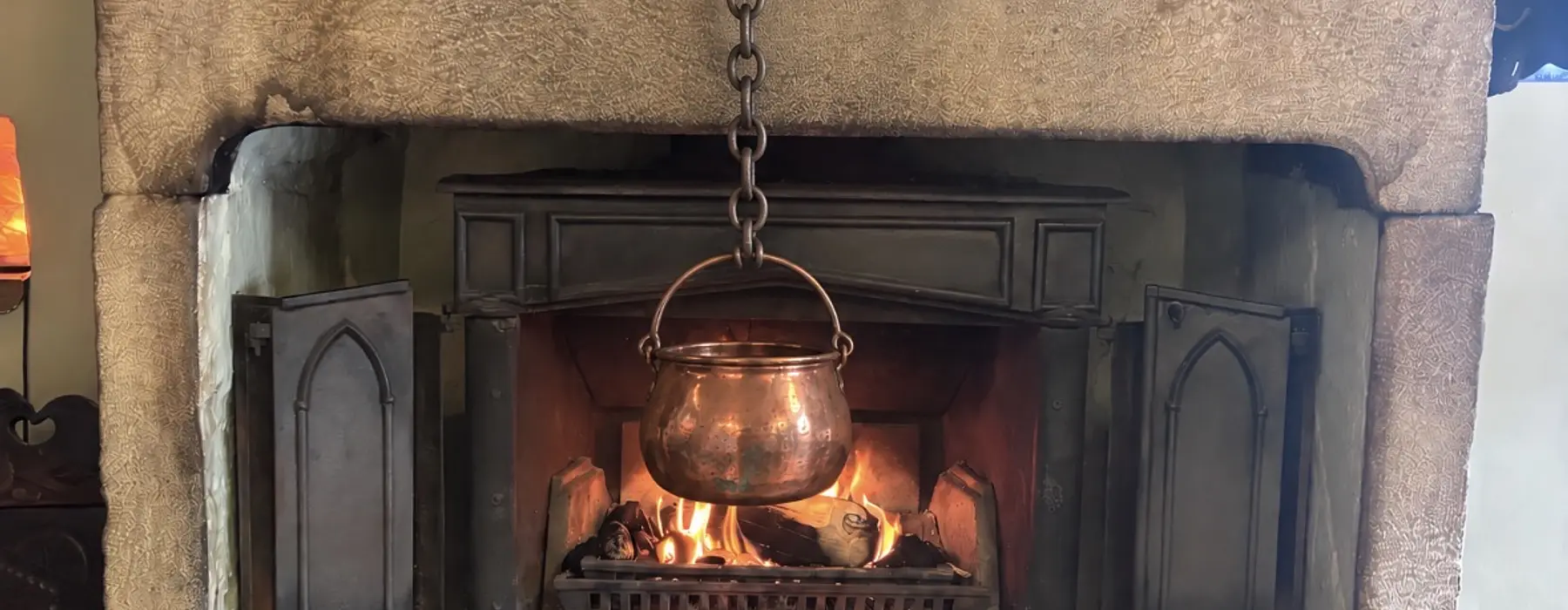
Look closely at that massive stone lintel and how it is chiselled out by hand centuries ago and framed by the tapered stone hood above and you’ll spot something that drives folks with an eye for modern neatness a bit mad. It literally took me these 45 years until a customer pointed it out to me a couple of weeks a go… I wonder how long it bugged him for?! Right there, pinned into the stonework is our brass hook.
And no, before you ask, your eyes aren't deceiving you after a pint of bitter: it isn’t in the dead centre. It sits noticeably nudged over to one side
Every so often, someone will tilt their head, look up from their chair, and ask why on earth it was put in crooked. In a world full of spirit levels and laser-straight symmetry, it looks like an old builder's mishap. But when you’re standing in an inn that’s been serving folk since 1307, across four generations of my own family keeping watch, you learn pretty quickly that our ancestors never wasted effort on accidents. Everything was built for graft and survival.
Before modern cast-iron stoves and kitchen ranges took over, an open stone inglenook like this wasn't just decorative; it was the engine room of the entire inn. That off-centre hook served a very real, practical purpose.
In the days of open hearths, heat was an art form. If you hung a heavy pot dead centre over the fiercest part of the blaze, whatever you were cooking—be it pottage, broth, or spiced ale for frozen travellers—would boil over or scorch to the bottom in no time. By setting the hook and chain slightly to one side, you created what was essentially medieval temperature control. You could bank the roaring timber or coal on one side to get a kettle shrieking, while a heavy pot (much like the little copper cauldron I’ve hung there now) sat just off the main draught, gently simmering away all day long without catching.
Over the centuries, a hook like that had half a dozen jobs depending on the season:
• Simmering & Curing: It held kettles, cast-iron cauldrons, or seasonal game birds hung in the rising woodsmoke to cure just out of reach of the hungry flames.
• Drying the Weather Off: On bitter Yorkshire nights when packhorse drovers walked in dripping wet from the moors, twine was tied from the hook across to the stone corners to dry woollen cloaks, salt bags, and leather tack in the rising warm air.
• Lighting the Snug: Before gas or electricity, iron grease lamps or rushlight holders were swung out over the hearth to throw light across the flags without dripping hot fat straight into the hearthstone ash.
Times change, of course. Today, we’ve got our stove set in the hearth with its Gothic arched doors swung wide, the kettle whistling for a proper brew of Yorkshire Tea or Dark Woods coffee, and fresh homemade bakes cooling on the counter. But that hook and that ancient stonework remain untouched.
It’s a little reminder of the folk who stood right where you’re sitting, warming their boots before the roads were even paved. Next time you drop by, take a look up, give a nod to that crooked hook, and enjoy the fire. Some things are just too good to ever straighten out!! xx
More from the inn
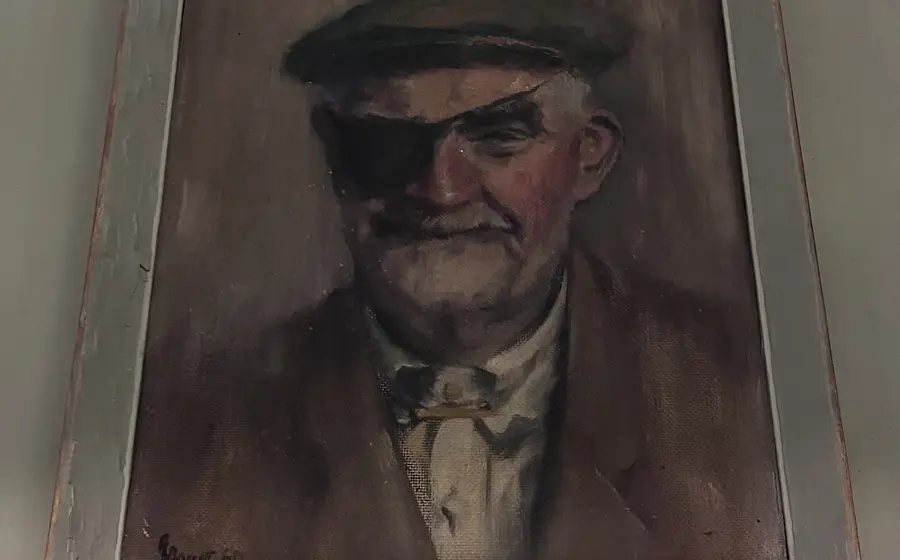
Ted Banks: The Man in the Painting in Our Middle Bar
Not all the history in an old pub belongs to the building. Sometimes it belongs to the people in the pictures.The painting of Ted Banks in our middle bar is a lovely example. My...
Read story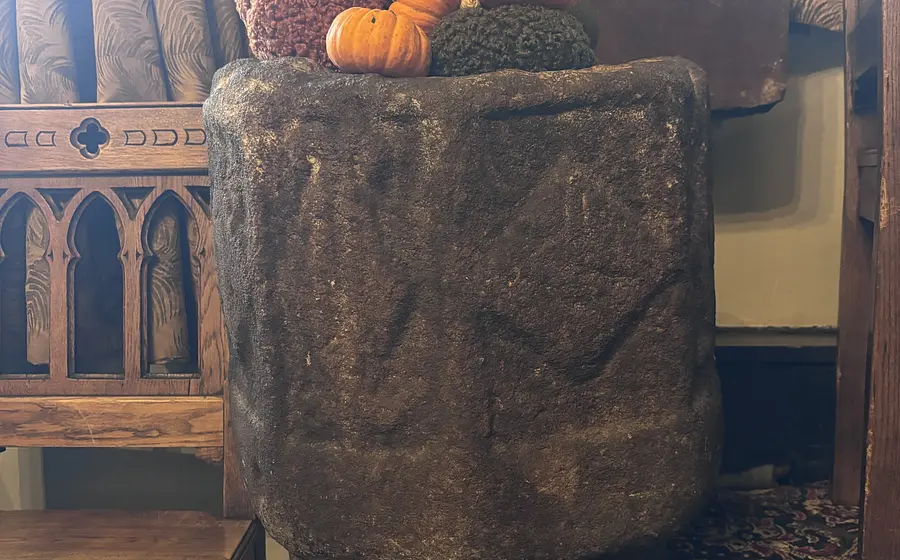
The Saxon Font in Our Bottom Bar: A Mystery Unearthed
If you’ve ever had a drink down in the bottom bar, chances are your pint has rested somewhere near a rather hefty piece of carved gritstone that looks like it belongs in an...
Read story
Tim bobbin: Who Was Tim Bobbin?
Tim Bobbin was the pen name of John Collier (1708–1786), a schoolmaster, artist, caricaturist and writer. Born in Urmston, he spent much of his working life teaching in Milnrow,...
Read story