
Pub History · 07 October 2026
Woven into 1307: Robert del Brigge and the Cloth That Built Our Valley
When you stand in the middle bar with a pint in your hand, watching the firelight flicker against the stonework, it’s easy to wonder who took the very first order across this counter.
When you stand in the middle bar with a pint in your hand, watching the firelight flicker against the stonework, it’s easy to wonder who took the very first order across this counter.
Four generations of our own family have stood behind this bar, and while that feels like a fair stretch of time to us, our roots sink vastly deeper into the Yorkshire soil. More than seven hundred years, in fact.
The earliest written record of an inn on this ground dates right back to 1307. A time when Edward I had just died, knights still rode the highways, and our little valley was carving out a livelihood from sheep, stone, and the rushing waters of the River Ryburn. And the man tied to that very first chapter wasn’t just a tavern keeper. He was an early Yeoman clothier named Robert del Brigge of Soyland.
To understand who Robert was, you have to picture what this corner of Yorkshire was like in the fourteenth century.
Long before the Industrial Revolution filled northern towns with smoking mill chimneys and towering brick factories, cloth-making was an intensely personal, domestic craft. Yeoman clothiers like Robert were proud, independent men of the land. They owned their own smallholdings, farmed the steep hillsides, and raised hearty local sheep on the moors.
In low-ceilinged stone farmhouses dotted across Soyland, the women and children spun the fleece into yarn, while handloom weavers threw the shuttle back and forth from dawn until dusk. Once the rough woollen cloth was woven, it had to be cleaned and thickened "fulled" using the power of the fast-flowing local rivers, before being hauled over the rough packhorse trails to market.
Right here, where the ancient road crossed the Ryburn, was the natural meeting place for that trade.
Robert del Brigge wasn't just tied to the land; his very name, of Brigge, root and branch, belonged to this crossing. Whether travellers were taking pieces of raw woollen cloth towards York, heading west towards Chester, or simply resting their packhorses after a punishing haul over the Pennine tops, Robert’s door provided the one thing every weary trader needed: shelter, dry hearthstone, a flagon of safe ale, and a place to strike a bargain.
In many ways, the inn was the original trading floor of the valley. Over simple wooden tables, local weavers negotiated the price of fleeces, shared news of distant cloth fairs, and toasted successful deals by the light of tallow candles.
Robert’s enterprise didn't end with a warm hearth by the river, either. The cloth trade in this valley boomed, and the family he founded prospered right alongside it.
Down through the generations, the descendants of Robert of Brigge went from hardy medieval yeomen to influential, wealthy merchant gentry. They helped shape the architectural heritage of our entire region, building grand, fine stone houses that still stand across the district today, none more magnificent than the stately Somerset House in Halifax, with its grand Georgian frontage and historic links to the great cloth dynasties of the North.
Yet, while Robert’s bloodline climbed the social ladder and built grand mansions in town, it all began down here by the water’s edge in 1307.
When I look up at our heavy roof timbers today, I often think of Robert del Brigge hauling damp wool out of the weather, shaking hands over a cup of small beer, and laying the foundations of a Yorkshire hospitality tradition that has outlasted seven centuries of kings, storms, and changing times.
Mansions and manor houses come with gates and private drives, but an inn is built for everyone. Next time you cross the bridge to see us, take a moment to look at the ancient stones all over. You’re sitting in the very place where the story of our valley’s cloth, community, and hospitality was first woven into life.
More from the inn
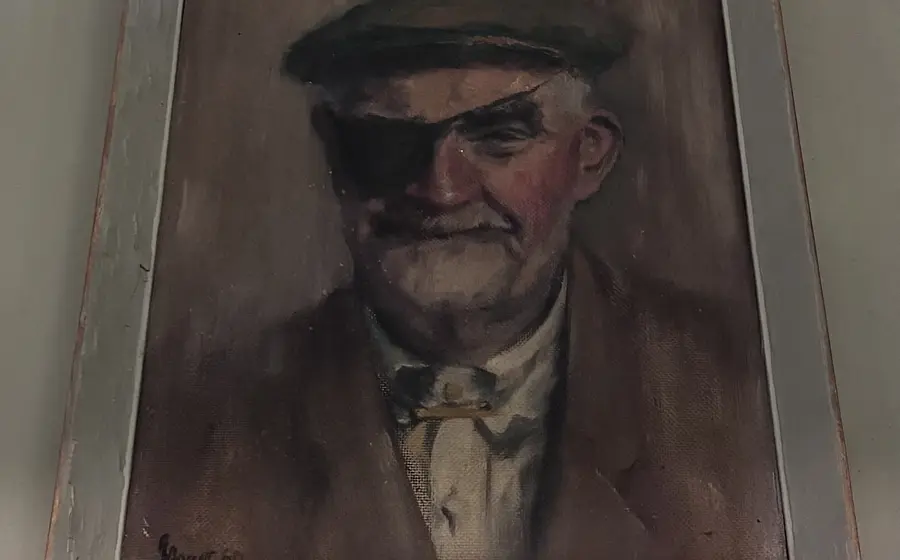
Ted Banks: The Man in the Painting in Our Middle Bar
Not all the history in an old pub belongs to the building. Sometimes it belongs to the people in the pictures.The painting of Ted Banks in our middle bar is a lovely example. My...
Read story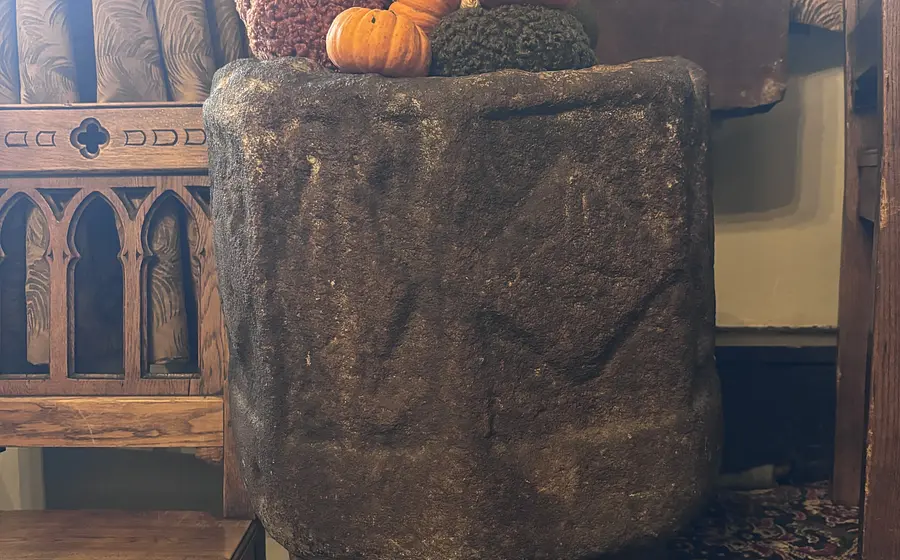
The Saxon Font in Our Bottom Bar: A Mystery Unearthed
If you’ve ever had a drink down in the bottom bar, chances are your pint has rested somewhere near a rather hefty piece of carved gritstone that looks like it belongs in an...
Read story
Tim bobbin: Who Was Tim Bobbin?
Tim Bobbin was the pen name of John Collier (1708–1786), a schoolmaster, artist, caricaturist and writer. Born in Urmston, he spent much of his working life teaching in Milnrow,...
Read story