Pub History · 18 October 2026
The Saxon Font in Our Bottom Bar: A Mystery Unearthed
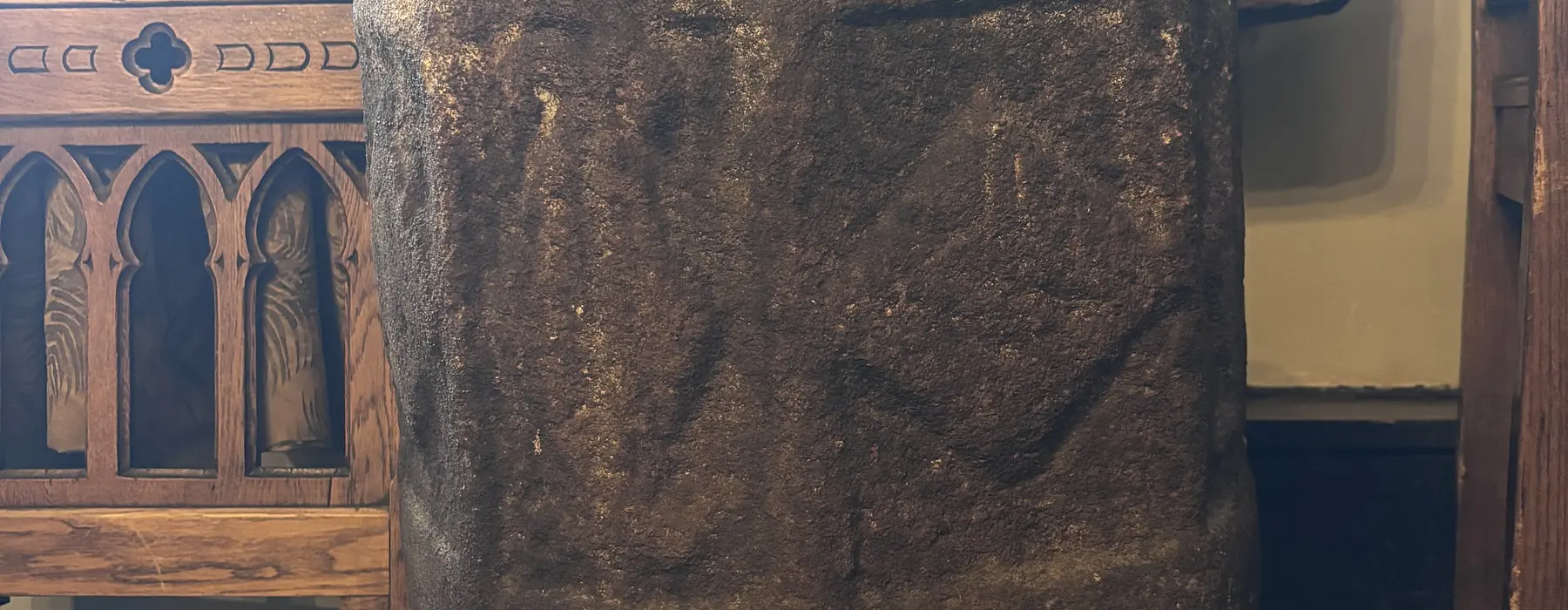
If you’ve ever had a drink down in the bottom bar, chances are your pint has rested somewhere near a rather hefty piece of carved gritstone that looks like it belongs in an ancient abbey rather than an old pub. That stone bowl is our Saxon font. Every customer asks about it, and to be honest, the story of how it ended up beside our bar is just as good as the centuries of mystery behind where it came from.
If you’ve ever had a drink down in the bottom bar, chances are your pint has rested somewhere near a rather hefty piece of carved gritstone that looks like it belongs in an ancient abbey rather than an old pub.
That stone bowl is our Saxon font. Every customer asks about it, and to be honest, the story of how it ended up beside our bar is just as good as the centuries of mystery behind where it came from.
It starts with family and a bit of building work. Back when Joyce Fairburn was managing the pub while Frank Fairburn held the licence, there was an old stone barn sitting out where the front car park is today. Uncle Ian Beaumont made the call that the barn had to come down to make room for vehicles. George Brunning and Mick Brunning got stuck in with the demolition, pulling down the old stonework, and right in the middle of clearing the rubble, they unearthed this massive, intricately carved stone font.
Uncle Ian knew right away that it wasn’t just a random trough or discarded mason’s block. Instead of letting it get carted off or buried, he had it carefully hauled inside and installed right there in the bottom bar, where it has sat ever since.
How on earth did an ancient christening font end up hidden in an old pub barn?
To understand that, you have to look at the deep, tangled history between our inn and the church across the way. Back in 1653, the inn was owned by Richard Firth. In his will, he bequeathed the property to St Bartholomew’s Church, on the strict condition that the minister preached five sermons a year. From that point on, the church leased the building out to tenant publicans to run as an alehouse, while the church council regularly crossed the road to hold their own parish meetings right here inside the inn.
With holy men, church wardens, and parishioners coming and going between the church and the pub for hundreds of years, it makes complete sense that a sacred relic like this ended up on our grounds. When older chapels were rebuilt or altered, ancient treasures were frequently salvaged or stashed out of harm's way. Tucked safely inside the barn, it quietly waited out the centuries until the Brunning lads swung their pickaxes.
Looking at the weathered carvings and markings worn smooth by centuries of touch, local folklore has always held that it dates right back to Saxon times.
In Anglo-Saxon England, christenings were a serious business. When Christianity took root in northern kingdoms like Northumbria, baptism was an act that quite literally bound the entire community together. Early Saxon christenings weren't the quiet, modern affairs of a quick splash of water over an infant’s forehead. Entire babes were submerged into the cold, deep stone bowl, surrounded by their kin, casting out evil spirits and welcoming a new soul into the parish fold. A font like this wasn't just furniture; it was the sacred centre of everyday life, touched by ordinary folk living through brutal, turbulent times.
Whether our font truly heard early Saxon prayers over a thousand years ago or was carved for an ancient predecessor of St Bartholomew’s, it carries an incredible weight of history.
It survived religious upheaval, witnessed Richard Firth's legacy and centuries of parish council meetings, slept through decades hidden in a dusty barn, and finally found its proper home thanks to Uncle Ian. Today, it sits comfortably in the heart of our bottom bar, watching over new generations having a laugh, settling in for a natter, and enjoying a proper pint.
Next time you’re down in the bottom bar, run a hand over that cool, worn stone. It’s got an awful lot of stories to tell, even if it keeps the best of them to itself xx
More from the inn

Tim bobbin: Who Was Tim Bobbin?
Tim Bobbin was the pen name of John Collier (1708–1786), a schoolmaster, artist, caricaturist and writer. Born in Urmston, he spent much of his working life teaching in Milnrow,...
Read story
The Village Stocks: Have You Seen Them?
Right outside our front door, you can’t miss the stocks. Most folk stroll past them on a sunny afternoon with a pint, have a bit of a laugh, and take turns posing for a photo. B...
Read story
Secrets Behind the Bar: The Real Story of Yorkshire’s Priest Holes
Back during the reigns of Elizabeth I and James I, practicing Catholicism was seen as high treason. Holding Mass could cost a family their land, their livelihood, or their heads...
Read story